Disclosure: Growthpolis builds Vista Bundles, one of the apps compared below. We've tried to call out where competing apps do something Vista doesn't (yet) rather than just make the case for our own app — the trade-offs section for Vista is as honest as the rest of this guide.
If you've searched for a Fast Bundle alternative, you're probably trying to solve one of two problems: Fast Bundle's revenue-based pricing is climbing faster than you'd like, or you need fixed bundles and quantity break bundles on the same product page and don't want to run two separate apps to get both. This guide covers what's actually possible without any app, why Shopify's native bundle tool stops short of what most growing stores need, and how 8 real, currently listed bundle apps compare — including specific, sourced pain points, not just feature lists.
Fast Bundle Security Attack ( Hacked ) Issue
Fast Bundle experienced a security incident in July 2026 involving malicious code injection, leading to its temporary removal from the Shopify App Store before safety checks and reinstatement procedures began.
What Happened with Fast Bundle?
Fast Bundle detected a security breach on July 17, 2026, where malicious code was injected into the system. Shopify Removal: Shopify temporarily removed the app from the marketplace and deactivated it on July 18, 2026, as a safety precaution.
Reinstatement of Fast Bundle:
Fast Bundle was completely unavailable on the Shopify App Store for approximately 13 days. Shopify temporarily pulled the app and deactivated it on July 17, 2026, following a security attack that resulted in a malicious code injection. After an independent security review, third-party penetration testing, and an incident report evaluation, Shopify deemed the issue resolved. The app began rolling back onto the store via direct links around July 30, 2026, and its public listing was fully restored in August 2026.
What Happened to Active Stores Using Fast Bundle
- Disappearing Widgets: Shopify paused live widgets overnight as a safety precaution. For active stores, bundle offers, mix-and-match configurations, and volume discount blocks instantly vanished from product pages.
- Broken Customer Journeys: Merchants running paid advertisements directly to landing pages or bundle offers experienced failed purchases. Shoppers could no longer see the bundled pricing or add composite sets to their carts.
- Loss of Revenue: Because the app went “silent” abruptly, many merchants reported unexpected drops in Average Order Value (AOV) and conversion rates until they manually set up automatic Shopify discounts or shifted to an alternative app.
- No Leaked Data: According to the official investigation and subsequent Vulnerability Assessment and Penetration Testing (VAPT), the developer reported no evidence that customer, store, shopper, or payment data was exposed or compromised.
- Configurations Preserved: As a policy, Shopify retains uninstalled or deactivated app data for up to 30 days. So, when merchants reinstalled Fast Bundle using the restoration links post-July 30, their previous bundle structures, custom settings, and layouts remained intact and didn't have to be rebuilt from scratch
Quick Answer: Fast Bundle vs. the Alternatives
| App | Rating | Reviews | Starting Price | Best For |
|---|---|---|---|---|
| Fast Bundle | 5.0★ | ~3,000+ | Free trial, from ~$19/mo (revenue-based) | Broadest single-app feature set |
| Vista Bundles | New | — | Free plan, $15/mo flat (Pro) | Fixed + quantity break bundles in one app, flat price |
| Kaching Bundles | 5.0★ | ~5,300 | Free to install, from ~$14.99/mo | Largest review base, A/B testing |
| Bundler | ~4.9★ | ~2,500 | Free plan, from ~$9.99/mo (flat) | Flat fee, no revenue cap |
| Pumper Bundles | 4.9★ | ~3,000 | Free plan, capped at ~$39.99–$49.99/mo | Free starter tier |
| Easy Bundle Builder | 4.9★ | ~1,100 | Free plan, from $29/mo (revenue-based) | Multi-step build-your-own-bundle |
| FoxSell Bundle Builder | 5.0★ | ~80 | Free to install, from ~$49/mo (revenue-based) | Cart Transform API, 30-product fixed bundles |
| Zoorix | ~4.9★ | ~400 | Free plan, from $7.99/mo | Lowest entry price, AI cross-sell |
| Simple Bundles & Kits | 4.9★ | ~750 | Free plan available | 3PL / warehouse inventory accuracy |
Ratings and review counts shift as apps update their listings — always confirm current numbers on the Shopify App Store before you commit.
What Fast Bundle Does vs. What Shopify Allows Natively
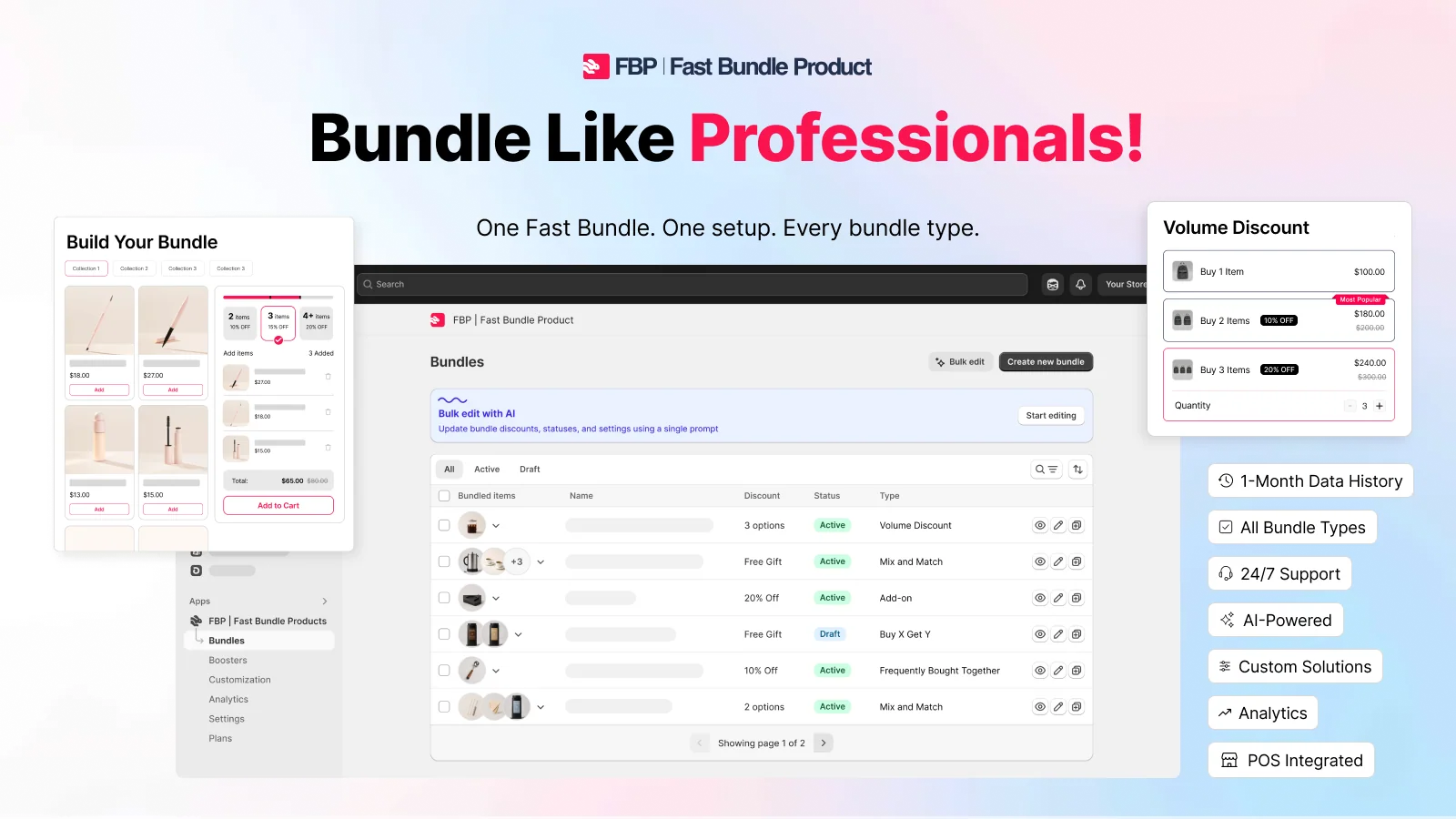
Fast Bundle (listed as “FBP | Fast Bundle & Upsell App”) is a bundling and upsell app supporting fixed bundles, mix and match, Frequently Bought Together, volume discounts, and Buy X Get Y, plus an AI bundle image generator on paid plans. Its pricing scales with how much extra revenue the app generates for your store.
Here's the part most comparison articles skip: Shopify already includes a free bundling tool, and it's worth knowing exactly where that tool stops before you pay for anything. The native “Shopify Bundles” app, built by Shopify, lets you:
- Create fixed bundles (pre-set product combinations sold as one unit) and multipacks
- Sync inventory across bundle components in real time
- Let customers pick variants (size, color) within a bundle
What it does not do: mix-and-match bundles where a shopper picks their own items, build-your-own-box flows, tiered or volume-based quantity discounts, or subscription bundles. Every third-party app on this list, including Vista Bundles, exists specifically to cover that gap.
Why the Native Bundle Limitation Actually Exists
Most “Fast Bundle alternative” roundups stop at “Shopify doesn't do this, install an app.” Here's the underlying mechanics, sourced directly from Shopify's own documentation:
The native Bundles app hits a hard variant ceiling. According to Shopify's own Help Center documentation, fixed bundles are capped at 30 components, dynamic bundles at 150 components, and every bundle — regardless of type — is capped at 3 options and 100 variants total. That's not an arbitrary product decision: a bundle is technically treated as a standard Shopify product once it's created, so it inherits the same variant and option ceiling every other product on the platform has. There's no separate “bundle” data model bypassing that limit.
Quantity breaks and mix-and-match need a different piece of Shopify's infrastructure entirely. Tiered pricing and pick-your-own bundles require logic that runs dynamically as items are added to the cart — that's handled by Shopify's Cart Transform API, a Shopify Functions target that lets an app expand, merge, or reprice cart line items in real time. The native Bundles app doesn't use Cart Transform at all; it uses a simpler product-grouping approach, which is exactly why it can't do dynamic, quantity-based pricing.
And here's the constraint that explains why “just install two bundle apps” doesn't work well: per Shopify's Cart Transform documentation, a store can have a maximum of one active Cart Transform function installed at a time. If two apps on your store both try to claim that slot, one gets blocked or overridden. This is a big part of why merchants end up consolidating into a single bundling app rather than stacking a “fixed bundle” app and a separate “quantity break” app — architecturally, only one of them can own the cart-level logic.
Manual and Native Workarounds (Before You Install Anything)
If your bundling needs are simple, you may not need a paid app at all:
- Basic fixed bundles or multipacks (≤30 products, ≤100 variants): Use Shopify's free native Bundles app. It includes real-time inventory sync at no cost.
- Simple Buy X Get Y offers: Shopify's native automatic discounts support BOGO-style rules without any app — the trade-off is that the offer typically doesn't display on the product page itself, and the free item doesn't auto-add to cart, so customers have to know the deal exists and add it manually.
- One-off custom bundle pricing: Staff can build a manual draft order with adjusted pricing for a specific customer request, without any bundling logic running store-wide.
- Fully custom dynamic bundle logic (Shopify Plus only): Technically, a merchant with development resources can build and deploy their own Cart Transform Function via the Shopify CLI instead of installing a third-party app. This claims your store's one Cart Transform slot, same as an app would, and requires ongoing maintenance as Shopify's Functions API changes versions.
If none of those cover what you need — quantity breaks, mix-and-match, or both fixed and tiered bundles on the same product page — that's the point where a dedicated app earns its cost.
Vista Bundles: Best Overall Pick (Price vs. Features)
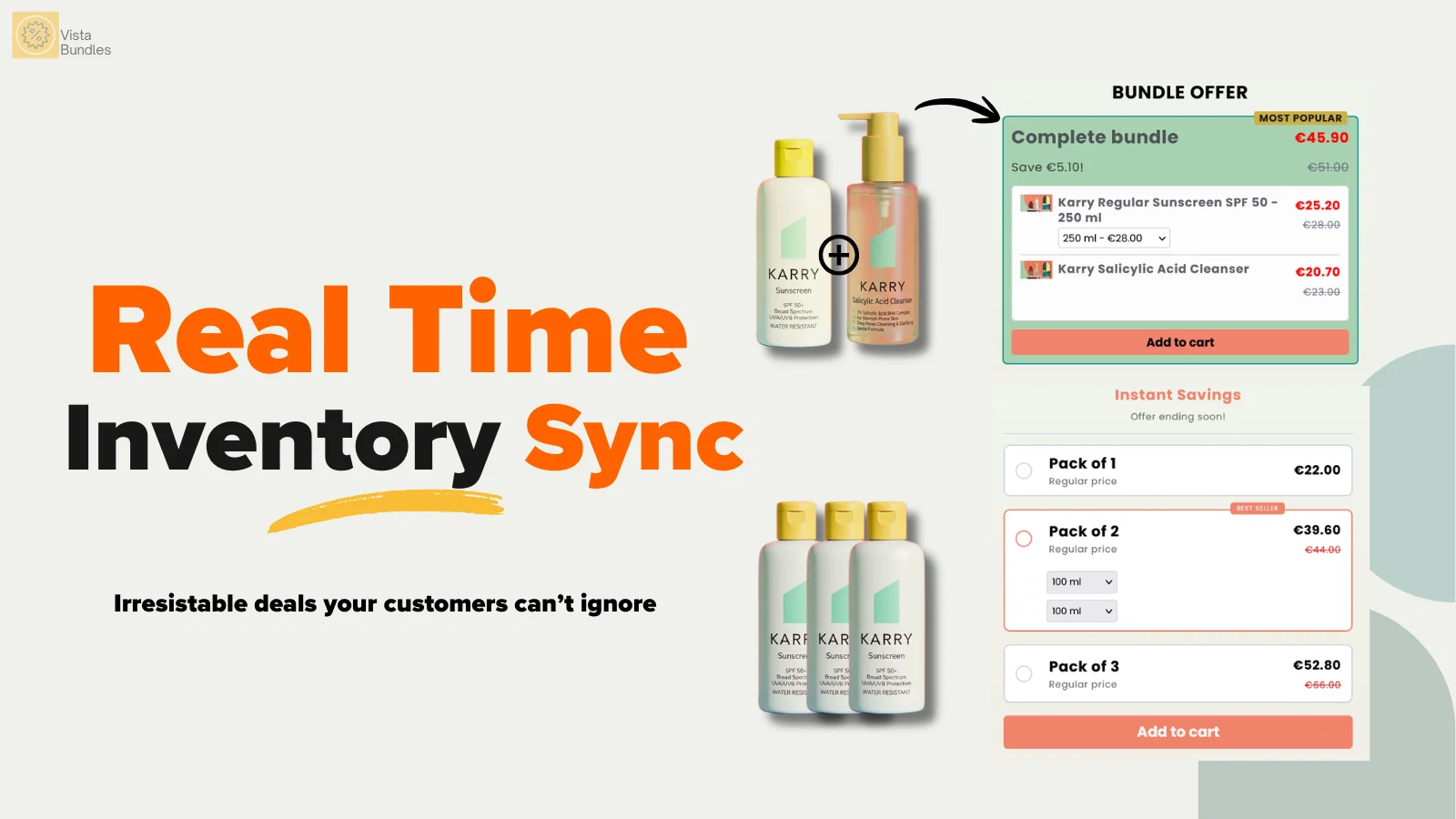
Vista Bundles is built around a specific gap: merchants who want fixed bundles and quantity break bundles in one app, with customization on the product detail page, instead of running two apps or living with the native tool's ceiling. It includes:
- Fixed product bundles for kits, sets, and pre-built combos
- Quantity break (tiered) discount bundles for buy-more-save-more offers, useful for B2B and wholesale pricing
- Real-time inventory sync so bundle components stay accurate
- Flat or percentage discount types
- Exclusion rules, so discounts can be turned off for specific products or collections instead of applying store-wide
On pricing: a free plan covers the core bundle types, and Pro is a flat $15/month (or $150/year) — not a percentage of the extra revenue your bundles generate. Compared against Fast Bundle's revenue-tiered plans, or builder-style apps charging $29–$249/month as bundle sales scale, a flat $15/month is a meaningfully different cost structure once bundle revenue starts growing.
Honest trade-off: Vista Bundles is newer than most apps on this list and doesn't yet have a public review history to point to if a long track record of reviews matters most to your decision; weigh that against the pricing and feature fit above before you commit. On the contrary, many established apps take security issues as for granted, like we saw with the security attack issue with Fast Bundle (above). However, fresh apps with new code and technology are more active with customer support and security.
7 More Fast Bundle Alternatives, Benchmarked
Feature lists look similar across bundle apps — what separates them in practice shows up in how each one behaves once a store is actually running it. Here's what stood out for each, based on digging into their live Shopify App Store review histories rather than their own marketing copy.
Kaching Bundles App & Upsells
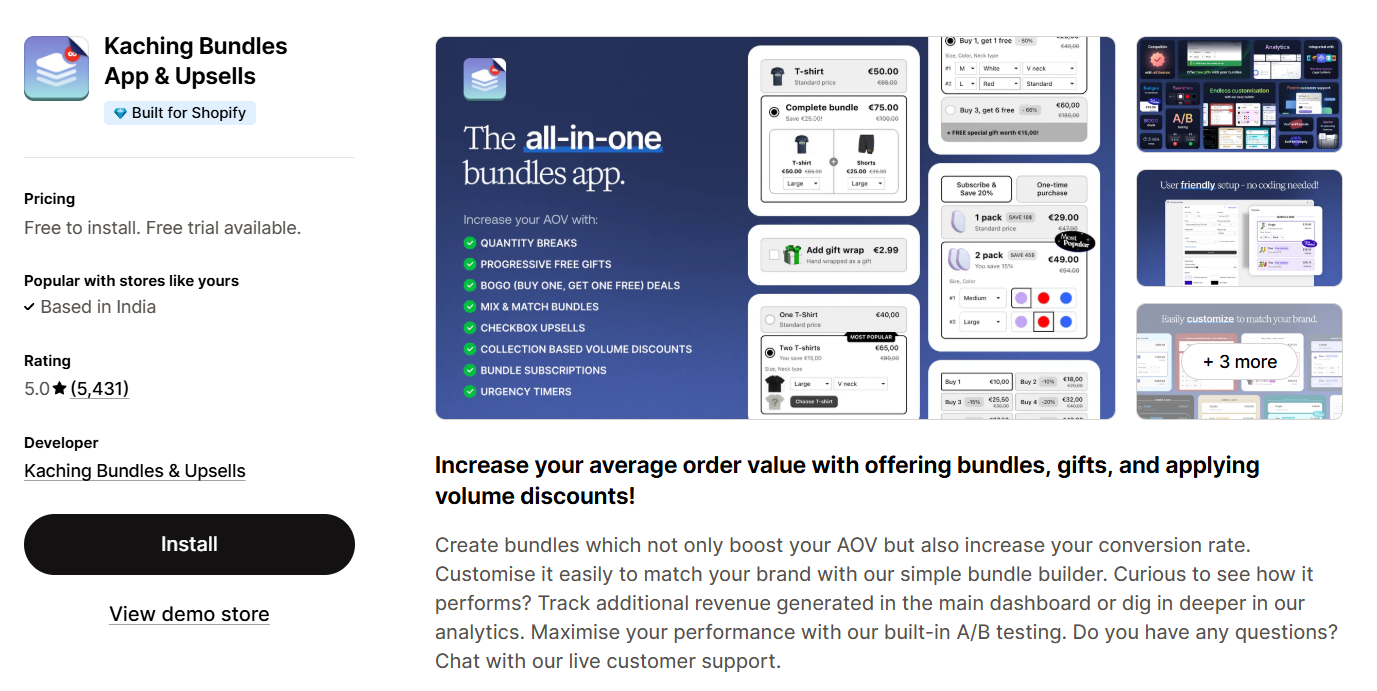
The largest review base in this category at roughly 5,300 reviews and a 5.0-star rating, with fixed bundles, mix-and-match, quantity breaks, volume discounts, BOGO, subscriptions, wholesale pricing, and A/B testing. Free to install, with paid tiers from ~$14.99/month scaling to a Pro tier near $59.99/month.
Digging into its lower-starred reviews turned up a specific, reproducible bug pattern rather than vague dissatisfaction: at least one recent 1-star review documented a bundle configured to add 10 units to cart on selection that intermittently added only 1, an issue serious enough that the merchant flagged real revenue risk from unnoticed under-fulfillment. A separate independent review also noted that underperforming bundles don't get proactive feedback from the app — you have to go looking at your own conversion data to catch a bundle that isn't working. Worth testing thoroughly on a live product before fully rolling it out.
Bundler – Product Bundles App
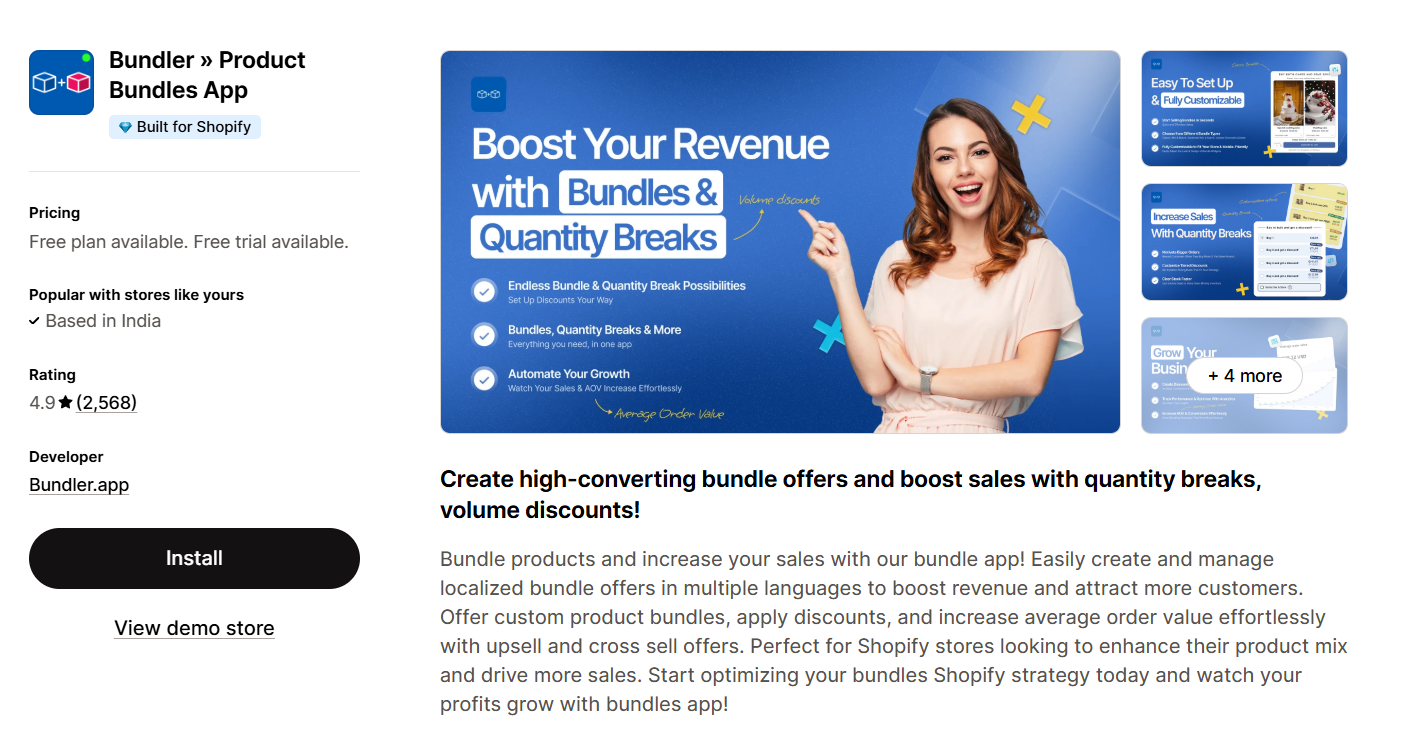
The flat-fee option here — no revenue-based commission, which is the specific reason multiple merchants cite for choosing it over usage-based competitors, particularly seasonal stores that don't want their bill spiking during peak months. Covers classic bundles, mix and match, quantity breaks, and tiered discounts, with a free plan and paid tiers from ~$9.99/month.
Its own 1-star reviews cluster around two specific, non-overlapping complaints: a checkout-blocking popup that persisted even after being disabled in settings (with a multi-day support delay to resolve), and difficulty setting an exact bundle price — the app applies a discount off the combined component price rather than letting a merchant type a target bundle price directly, which tripped up more than one reviewer expecting the latter.
Pumper Bundles Quantity Breaks
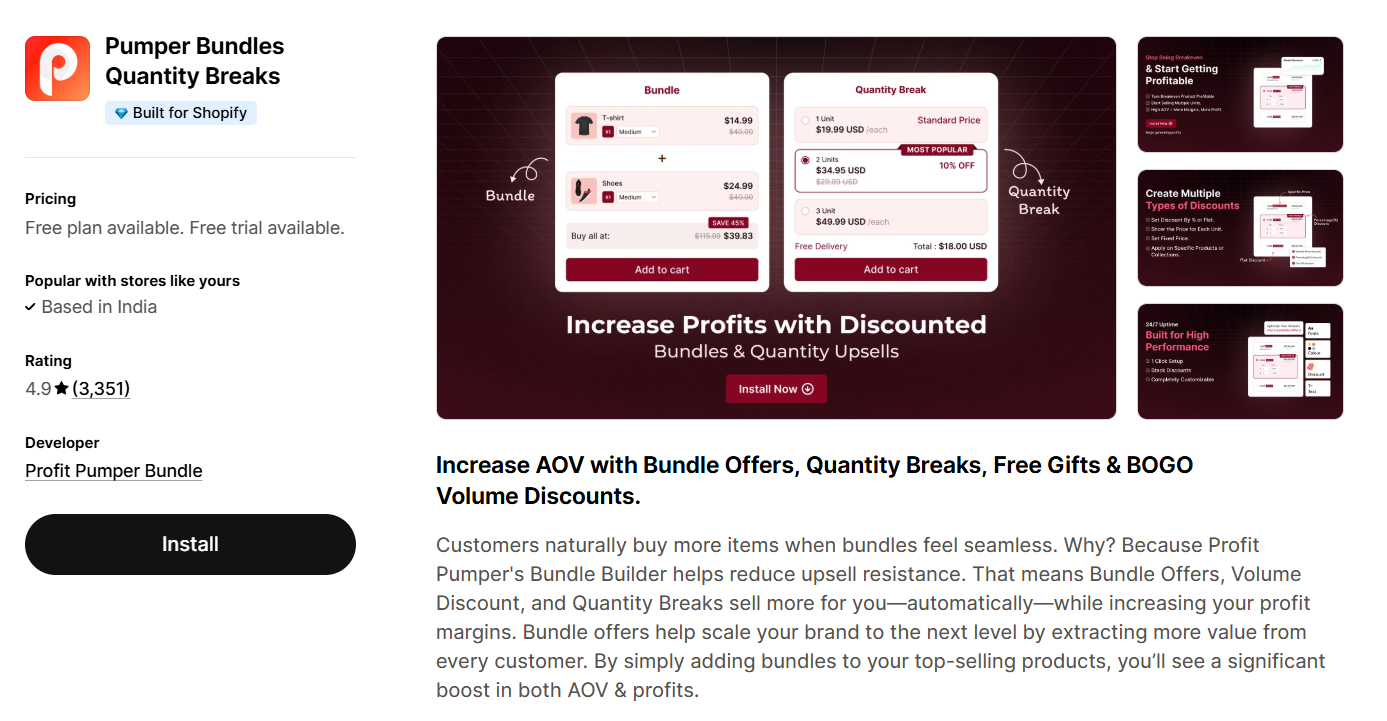
Roughly 4.9 stars across ~3,000 reviews, covering volume discounts, product bundles, BOGO, free gift with purchase, and mix & match. Free plan up to $300 in extra revenue, paid plans capped at $39.99–$49.99/month once a store scales.
The clearest documented pattern in its review history is a quantity-break accuracy bug: a merchant reported that customers purchasing enough units to qualify for a tiered discount were sometimes only credited for one or two units' worth of the discount instead of the full tier, despite repeated attempts by support to resolve it. That specific complaint — discount math not applying correctly at higher quantities — is worth testing directly against your own tier structure before relying on it for a high-volume promotion.
EB | Easy Bundlers: Bundle Builder, BYOB
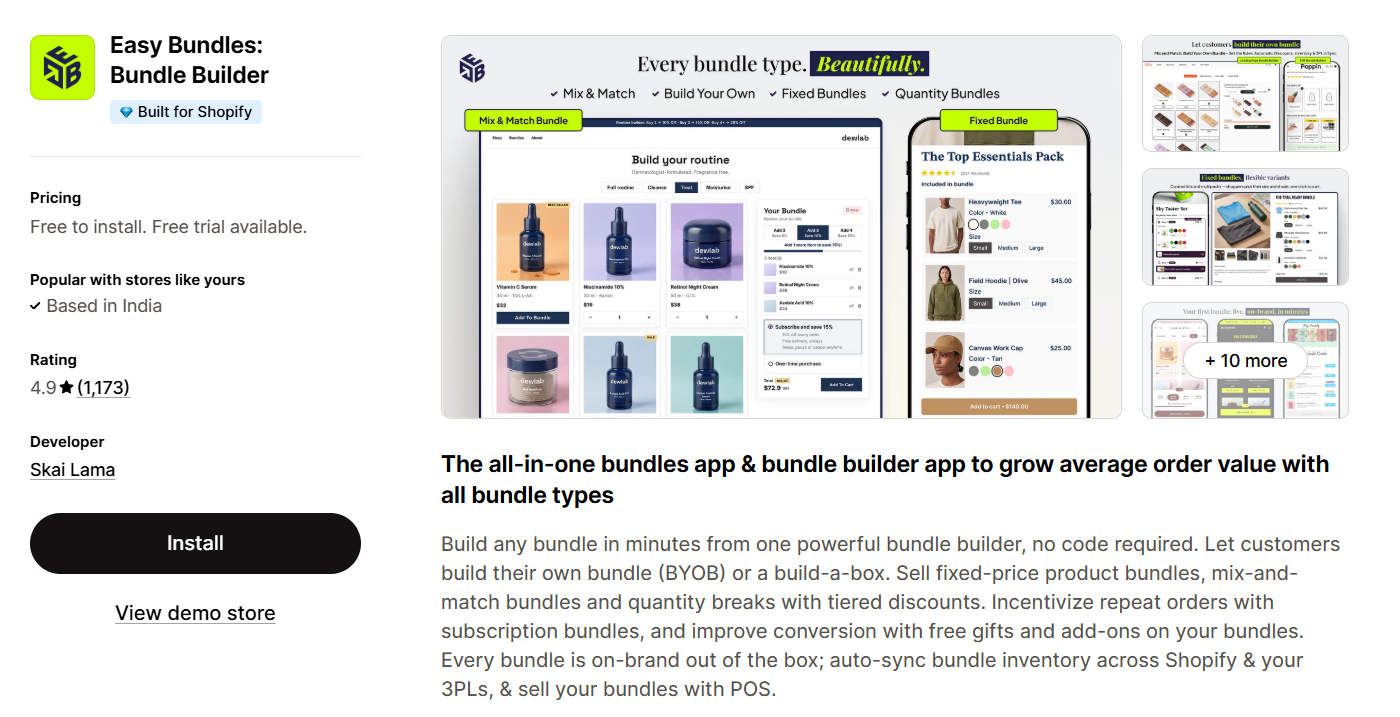
4.9 stars across ~1,100 reviews, built for a multi-step “build your own bundle” experience — useful for sample packs, skincare routines, or gift boxes. Free plan up to $500 in monthly bundle sales; paid tiers start at $29/month and scale with revenue.
The bulk of its critical feedback is narrower than most apps on this list: complaints center specifically on widget placement flexibility — one 1-star reviewer described being unable to get the builder to display where they wanted it on the product page, with support unable to resolve it. Outside that specific complaint, the review history skews heavily toward praise for support responsiveness.
FoxSell Bundle Builder
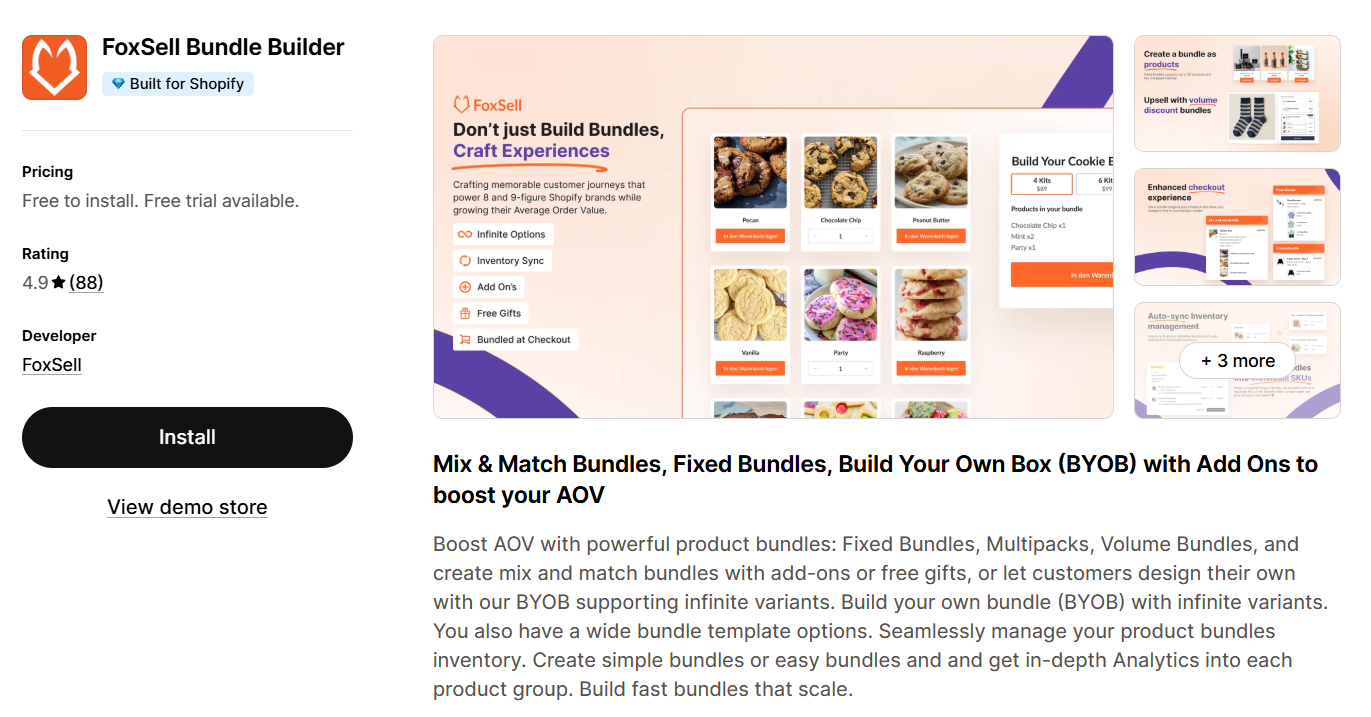
A newer, Built for Shopify-certified app at 5.0 stars across roughly 80 reviews. It's built on Shopify's Cart Transform API — the same infrastructure discussed above — rather than the older discount-rule pattern many legacy bundle apps still run on, which matters for accurate SKU-level inventory syncing through checkout and fulfillment. Supports fixed bundles of up to 30 products and infinite-variant build-your-own-bundles. Free to install, paid plans from ~$49/month scaling with revenue.
Its review count is small enough that no clear complaint pattern has emerged yet — worth weighing that lack of a track record against its more modern technical foundation.
Zoorix: Bundles & Cross Sell
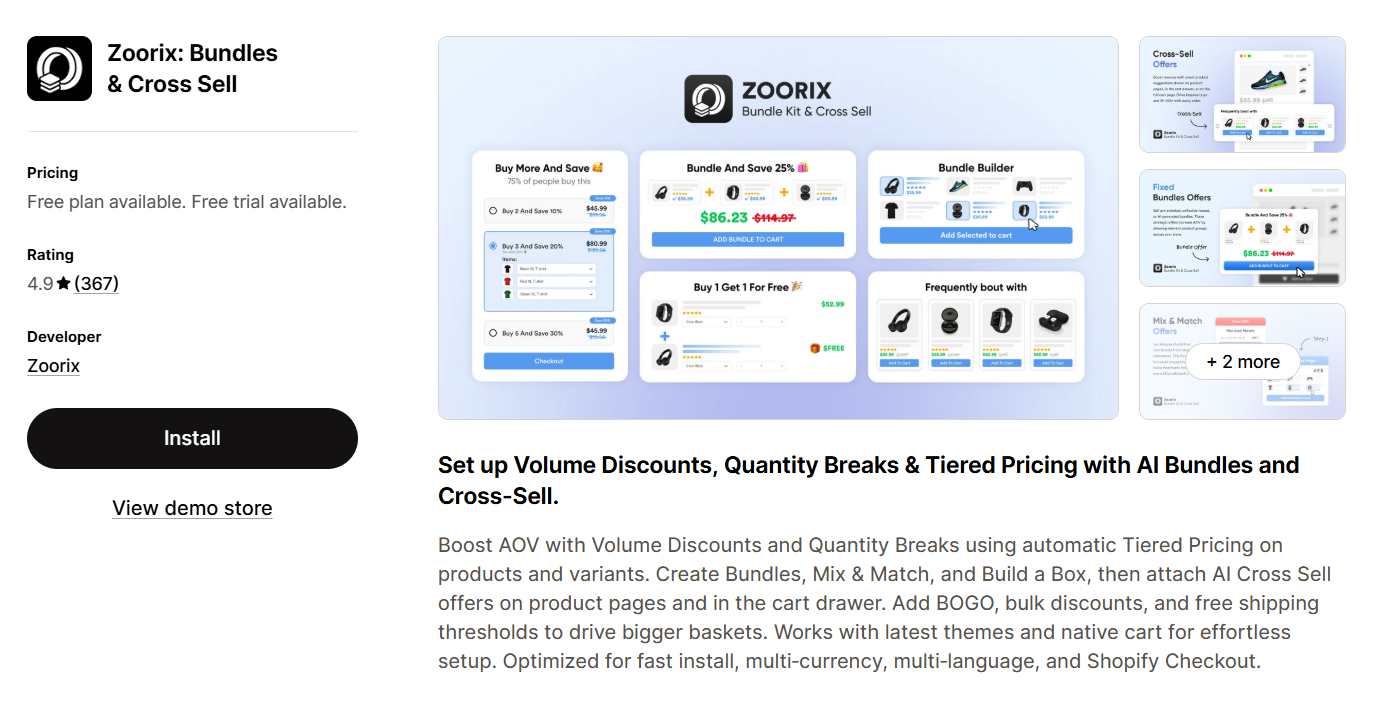
Around 4.9–5.0 stars across roughly 400 reviews, combining bundles, mix and match, quantity breaks, and AI-based cross-sell in the cart drawer and on product pages. Forever-free plan, paid tiers from $7.99/month — the lowest entry price on this list.
Independent reviews of Zoorix have flagged two specific functional limitations: items being added to cart automatically in a way merchants didn't always want, and the cart drawer widget occasionally lagging behind actual cart state after an update. Both are worth checking against your specific theme before launch, since cart-drawer behavior varies significantly by theme.
Simple Bundles & Kits
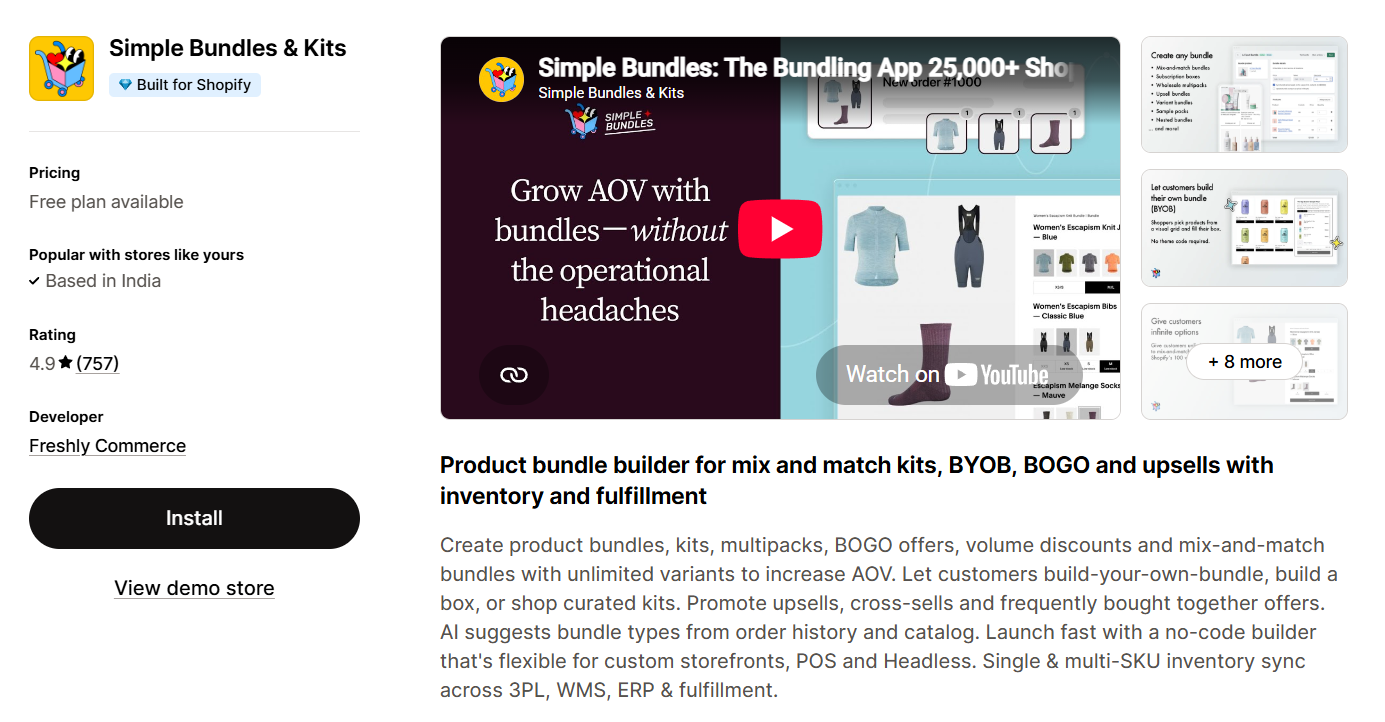
4.9 stars across roughly 750 reviews, built specifically around component-level inventory accuracy — the app most often recommended for stores with 3PL or warehouse fulfillment. Free plan available.
Its own review history shows a narrower, more operational set of complaints than front-end-focused competitors: one reviewer flagged that bundle sales can overstate gross revenue reporting inside Shopify's own analytics because of how component pricing is recorded, requiring manual reconciliation at month-end. A separate 2-star review noted that bundles created through the app can't be sold through Shopify POS, which matters specifically for stores with a physical retail presence.
Key Features to Look for in a Bundling App
- Bundle types supported. Fixed bundles, mix and match, quantity breaks, BOGO, and build-a-box each solve a different merchandising problem — decide which ones you actually need before paying for the rest.
- Inventory sync. Real-time, component-level sync is non-negotiable if you run tight stock; a bundle selling out of sync with its components risks overselling.
- Cart Transform vs. discount-rule architecture. Apps built on Shopify's newer Cart Transform API (like FoxSell and Kaching on newer flows) tend to keep inventory and fulfillment more accurate through checkout than older discount-rule apps that patch around gaps with custom JavaScript.
- Pricing model. Flat-fee apps (Bundler, Vista Bundles) keep costs predictable; revenue-based apps can look cheaper on paper but scale unpredictably as bundle sales grow.
- Product-page customization. If you're running quantity breaks and fixed bundles side by side, look for apps that let you design the widget per product instead of forcing one layout store-wide.
- Analytics. Per-offer conversion and revenue tracking tell you which bundles are actually working rather than guessing.
How to Switch From Fast Bundle Without Losing Data
- Audit your current setup — record your existing bundle rules, discount types, and product/collection exclusions from Fast Bundle before making any changes.
- Test on a duplicate or development store first, if possible, to see how the new app's widget renders on your live theme without touching checkout.
- Rebuild your highest-traffic bundles first in the new app and confirm the discount math matches what customers previously saw.
- Test checkout and inventory sync with a real or test-mode purchase to confirm bundle components deduct from stock correctly.
- Uninstall Fast Bundle only after confirming the new app works. Shopify generally retains an uninstalled app's data for up to 30 days, which gives you a buffer if something needs fixing before you finalize the switch.
Pros and Cons of Switching Bundling Apps
Pros:
- Flat-fee apps can lower costs as bundle sales scale
- One app covering both fixed and quantity break bundles reduces script conflicts and app bloat
- Newer apps built on Cart Transform tend to handle inventory and fulfillment more accurately than older discount-rule apps
Cons:
- Switching means rebuilding bundle rules and retesting checkout behavior
- Newer or smaller apps have a shorter review history to judge reliability by
- Revenue-based pricing can look cheaper upfront but cost more once bundle sales pick up
- Only one Cart Transform-based app can run at a time on a given store, so you can't simply layer a new bundle app on top of an old one without conflicts
Frequently Asked Questions
What is the Fast Bundle Shopify app?
Fast Bundle (FBP) is a bundling and upsell app supporting fixed bundles, mix and match, Frequently Bought Together, and Buy X Get Y, with pricing that scales based on the extra revenue it generates for a store.
Can you build bundles without an app on Shopify?
Yes, for basic cases. Shopify's native Bundles app supports fixed bundles and multipacks up to 30 components and 100 variants, with real-time inventory sync, at no cost. It doesn't support mix-and-match, tiered quantity discounts, or the product-page customization that dedicated apps like Vista Bundles offer — those require a Cart Transform-based app.
Is there a free alternative to Fast Bundle?
Yes, Vista Bundles, Bundler, Kaching Bundles, Zoorix, and Simple Bundles & Kits all offer a free plan or free tier before any paid upgrade is required.
How does bundle app pricing typically work?
Most bundle apps use one of two models: a flat monthly fee that stays the same regardless of sales volume (Bundler, Vista Bundles), or a revenue-based model where the price rises in tiers as the app generates more extra revenue for your store (Fast Bundle, Easy Bundle Builder, FoxSell).
Which Fast Bundle alternative offers both fixed and quantity break bundles?
Vista Bundles and Kaching Bundles both support fixed bundles and quantity break bundles in a single app; Vista Bundles does so at a flat $15/month, while Kaching's pricing scales with extra revenue.
Why doesn't Shopify's native bundle app support quantity breaks?
Because tiered, quantity-based pricing requires dynamic logic that runs as items are added to cart — that's handled through Shopify's Cart Transform API, which the native Bundles app doesn't use. It relies on a simpler product-grouping model instead, which is why it's limited to fixed combinations.
Can I run two bundle apps at once on Shopify?
Not cleanly, if both rely on Shopify's Cart Transform API. Shopify allows a maximum of one active Cart Transform function per store, so a second app attempting to claim the same cart-level logic will conflict with or override the first. This is a core reason to consolidate onto a single bundling app that covers your full range of bundle types rather than stacking apps.
Conclusion: Tailoring Your Bundling Solution
There's no single “best” Fast Bundle alternative — it depends on whether you value a long review history and A/B testing (Kaching Bundles), a strictly flat fee (Bundler), inventory-heavy fulfillment accuracy (Simple Bundles & Kits), or the lowest entry price (Zoorix). Before installing anything, check whether Shopify's free native Bundles app already covers what you need — fixed bundles under 30 components rarely require a paid app at all. For merchants who specifically need fixed bundles and quantity break bundles in one app, with product-page customization and a predictable flat monthly cost, Vista Bundles is the strongest price-to-feature match on this list — worth testing on its free plan before committing to a paid bundle app.