

Written by Navdeep Soni — I run Growthpolis, an SEO and Shopify growth agency working with e-commerce brands across Pune and Mumbai. This is the exact funnel I built and ran for a female-centric fashion brand, not a general theory piece.
🛍️Most e-commerce brands are sleeping on Pinterest — especially if your audience is women. Pinterest's own advertising data puts female users well above 60% of the platform's base. That's not a niche audience — for a fashion or lifestyle brand, it's most of your customer.
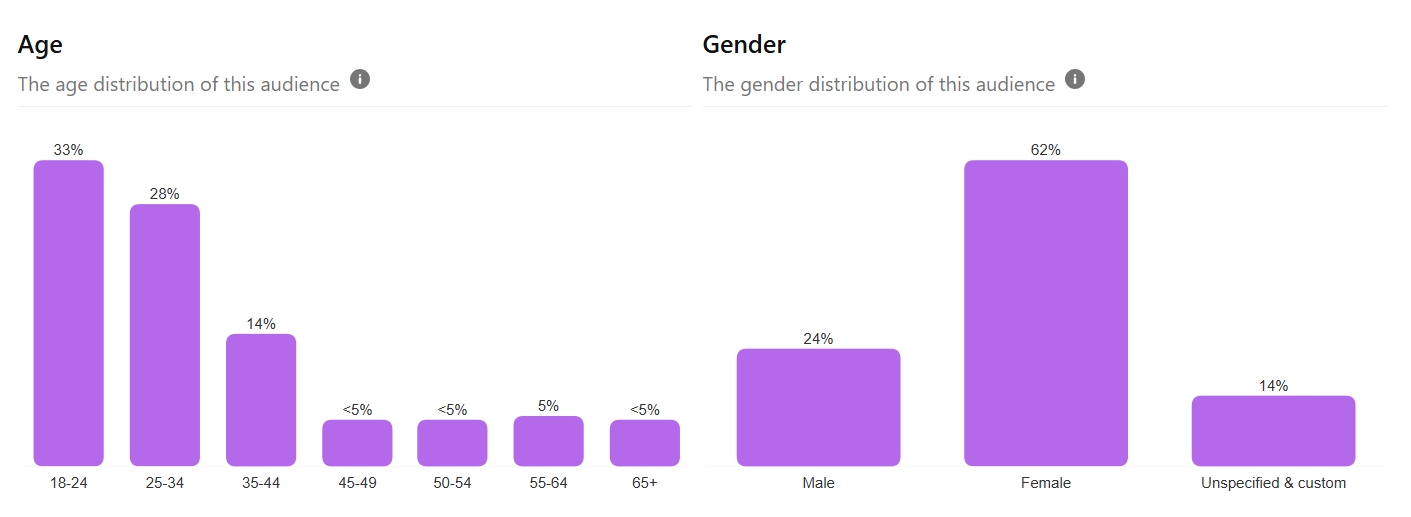
🤐 Everyone's fighting for the same attention on Google, Facebook, and Instagram right now, and for most brands the growth curve on those channels is flat. Some lean on parasite SEO or Facebook traffic that dries up the moment ad costs spike. There isn't a standout channel reliably bringing in low-cost, warm traffic — which is exactly the gap Pinterest sits in, if you treat it like an SEO channel and not a social feed.
Why I Tried This
💡 I was working with a female-centric brand looking for a new acquisition source — low-cost, sustainable, and specific enough to reach their actual customer instead of a broad audience. I'd already run Pinterest SEO on a photography site with strong results, so I adapted that same approach for the brand's product catalog and blog content.
Here are some juicy numbers from when we implemented this on a fashion ecommerce brand.
| Metric | Benchmark | Strategy |
| Average Traffic Lift % | 113%+ increase | Driven by high unbranded search volume (97% of top fashion queries) and blog-to-visual conversion. |
| Timeframe to Results | 5 months | Pinterest indexes content like a traditional search engine. Pins take 15–20 days to start ranking and compound over 90+ days. |
| Pin Count (Daily Output) | 10 Pins per day | Algorithm rewards consistency over bulk. This includes fresh product close-ups, lifestyle shots, and catalog syncs. |
| Board Count (Total) | 12 optimized boards | Focuses on hyper-specific long-tail keywords (e.g., “Minimalist Capsule Wardrobe 2026”, “Boho Chic Summer Dresses”). |
Why Pinterest Behaves Differently From Every Other Channel
Pinterest isn't social media in the way Instagram or Facebook are — it functions as a visual search engine, and Pinterest itself describes it that way to advertisers. That distinction matters operationally: a pin doesn't decay in a feed algorithm the way an Instagram post does. A well-optimized pin can keep surfacing in search and related-pins results for months after you publish it, which is why this channel compounds instead of requiring constant new content just to stay visible.
The honest caveat: that compounding effect isn't instant. In practice, expect a slow first 8–12 weeks while Pinterest's algorithm builds signal on your account and boards, before search traffic starts climbing meaningfully. Anyone promising fast Pinterest traffic is skipping this part.
The Funnel
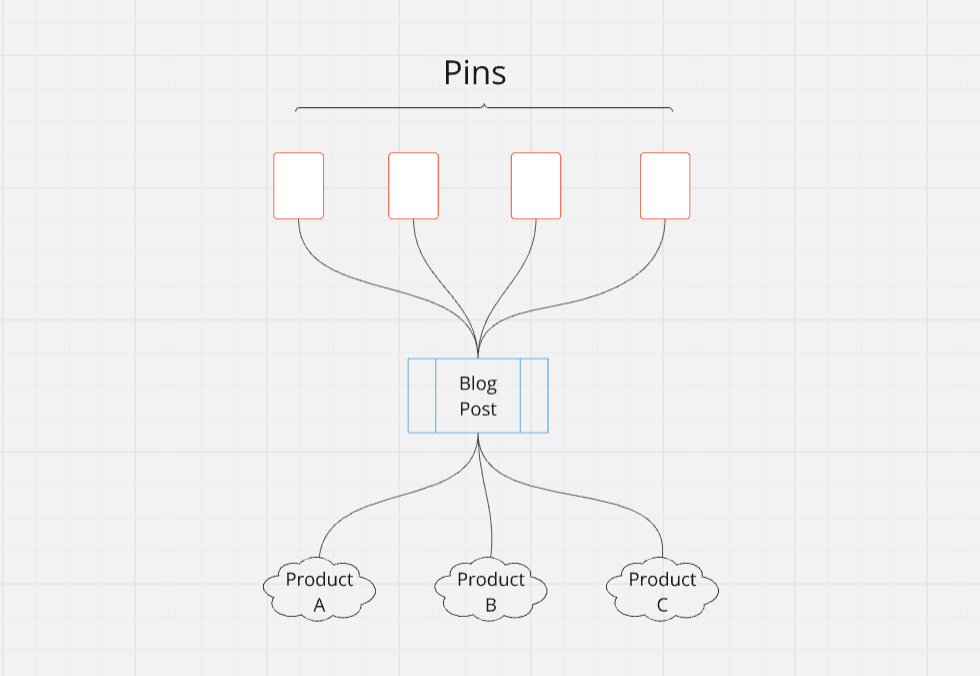
Pins ➡️ Blog Post / Product Page ➡️ Instagram Retargeting
Here's how each stage actually works, and why:
1️⃣ Build pins around top-searched topics in your category — not just what you want to sell. Use Pinterest Trends and the search bar's autocomplete to find what your category's audience is actually searching, the same way you'd do keyword research for Google. A pin built around a search term that already has demand outperforms a pin that's just a product photo with a caption.
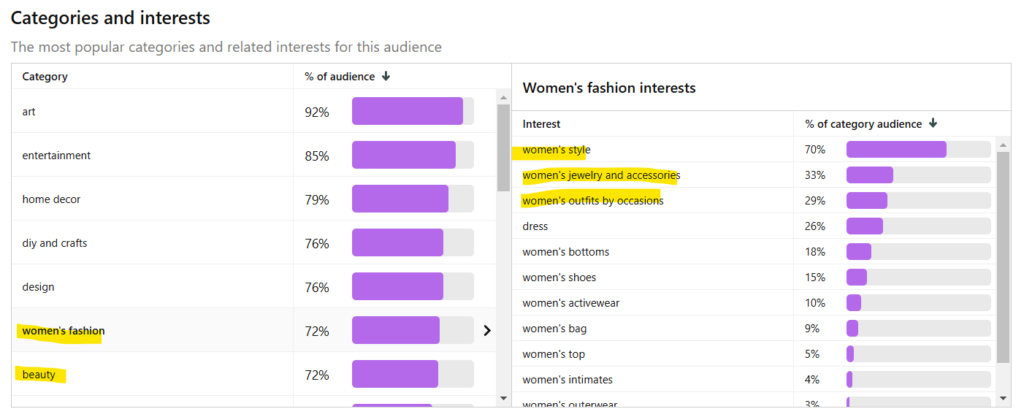
2️⃣ Optimize every pin for SEO — title, description, and alt text, not just a caption. Pinterest indexes pin text the way a search engine indexes a page: title and description are ranking signals, not just context for the viewer. A generic one-line caption is leaving ranking signal on the table.
3️⃣ Link each pin to a product page, or to a blog post that solves the exact pain point and naturally mentions your product. Pins that go straight to a hard-sell product page convert less than pins that land on content solving the search intent first, with the product as the natural next step — the same principle that makes content-led SEO work on Google.
4️⃣ Retarget that traffic with Instagram ads. Pinterest traffic already has intent — they searched for the thing you sell. Retargeting them on Instagram where they're likely already scrolling closes the loop at a lower cost than cold prospecting, since you're re-engaging warm traffic instead of buying cold attention.
What Pinterest Doesn't Do Well (So You're Not Surprised)
To be transparent about the limits, not just the upside:
- Pinterest Analytics has a data lag and limited historical range compared to Google Search Console — don't expect the same depth of keyword-level reporting.
- Boards decay if abandoned. The “evergreen” reputation applies to individual well-optimized pins, not to an account you set up once and never touch — Pinterest's own creator guidance recommends consistent pinning cadence to keep an account's overall visibility up.
- This isn't a fit for every catalog. It works best for visually-driven, aspirational categories (fashion, home, beauty, food) — it's a weaker channel for B2B or purely functional products where “pinning” isn't a natural user behavior.
Pro Tip: Build Boards Like Mini Blogs
✅ Don't dump every pin into one general board. Create categorized boards, each specific enough to keep a single interest cluster engaged — think of each board as its own mini content hub, where every pin adds unique value instead of repeating the last one. 🌱
TL;DR
The funnel is simple: Pins ➡️ Blog Post/Product Page ➡️ Instagram Retargeting.
Pinterest doesn't just drive traffic — it drives warm traffic that already has intent, which is why engagement and retention on that traffic tend to run higher than cold channels. It's not fast, and it's not a fit for every store — but if you're in a visually-driven e-commerce category and you're not treating Pinterest as an SEO channel, you're leaving evergreen, compounding traffic on the table.
1 thought on “Pinterest SEO Funnel for E-commerce Brands”
Comments are closed.